Heart disease remains one of the leading causes of serious health complications worldwide. The challenge is that many people ignore the early warning signs until the condition becomes severe. While occasional fatigue or shortness of breath may seem harmless, some symptoms can indicate an underlying heart problem that requires medical evaluation.
Recognizing heart disease symptoms early can help prevent complications and improve treatment outcomes. In this article, we discuss ten warning signs that should never be ignored and when you should consider seeking medical attention.
Why Early Recognition of Heart Disease Symptoms Matters
Many heart conditions develop gradually. In their early stages, symptoms may be mild, infrequent, or mistaken for common health issues such as stress, indigestion, or aging.
The heart works continuously to supply oxygen-rich blood throughout the body. When its function is affected, the body often sends warning signals. Paying attention to these signals can lead to earlier diagnosis and timely treatment.
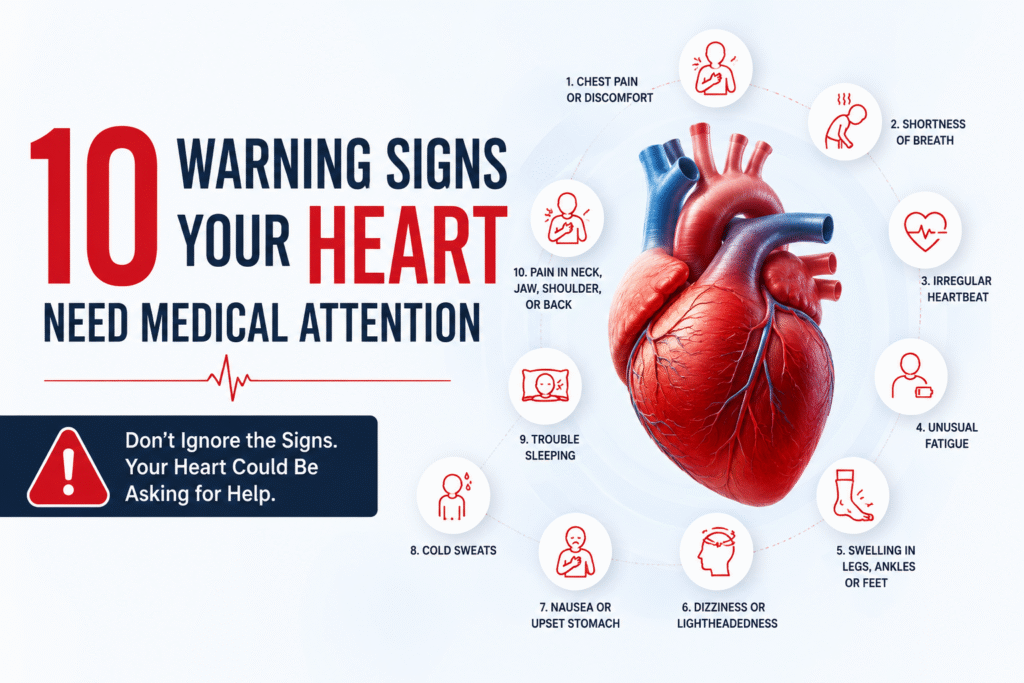
1. Chest Pain or Discomfort
Chest pain is one of the most recognized heart disease symptoms. However, not all heart-related chest discomfort feels the same.
What It May Feel Like
- Pressure or tightness in the chest
- A squeezing sensation
- Burning or heaviness
- Pain that comes and goes
The discomfort may occur during physical activity, emotional stress, or even at rest.
When to Seek Help
Immediate medical attention is necessary if chest pain is severe, sudden, or accompanied by sweating, nausea, or breathing difficulty.
2. Shortness of Breath
Feeling breathless after strenuous exercise is normal. However, unexplained shortness of breath during routine activities may indicate a heart problem.
Possible Signs
- Difficulty climbing stairs
- Breathlessness while walking short distances
- Waking up at night struggling to breathe
- Needing extra pillows to sleep comfortably
This symptom may occur when the heart cannot pump blood efficiently.
3. Unusual Fatigue
Persistent fatigue can sometimes be an early warning sign of heart disease, particularly in women.
Warning Signs
- Feeling exhausted despite adequate rest
- Difficulty completing routine tasks
- Sudden decline in energy levels
If fatigue is ongoing and unexplained, it deserves medical evaluation, especially when combined with other symptoms.
4. Pain Radiating to the Arm, Neck, Jaw, or Back
Heart-related discomfort does not always remain in the chest.
Areas Commonly Affected
- Left arm
- Both arms
- Neck
- Jaw
- Upper back
- Shoulders
This type of referred pain occurs because nerves serving the heart also connect with other areas of the body.
5. Irregular Heartbeat or Palpitations
Most people occasionally notice their heartbeat. However, frequent palpitations or an irregular rhythm may indicate an underlying cardiac issue.
Symptoms to Watch For
- Racing heartbeat
- Fluttering sensation in the chest
- Skipped beats
- Sudden episodes of rapid heart rate
If these episodes are frequent or accompanied by dizziness, medical assessment is recommended.
6. Dizziness or Lightheadedness
The brain depends on a steady blood supply from the heart. When circulation becomes inadequate, dizziness may occur.
Potential Warning Signs
- Feeling faint
- Sudden loss of balance
- Frequent lightheadedness
- Near-fainting episodes
Although dizziness can have many causes, recurring episodes should not be ignored.
7. Swelling in the Legs, Ankles, or Feet
Swelling, medically known as edema, may occur when the heart struggles to circulate blood effectively.
Common Signs
- Puffy ankles
- Swollen feet
- Tight shoes without explanation
- Leg swelling that worsens throughout the day
Fluid retention can sometimes be associated with heart failure and other cardiovascular conditions.
8. Excessive Sweating Without a Clear Cause
Unexpected cold sweats can sometimes be linked to reduced blood flow to the heart.
When It Becomes Concerning
Seek medical attention if excessive sweating occurs along with:
- Chest discomfort
- Shortness of breath
- Nausea
- Dizziness
These combinations may signal a serious cardiac event.
9. Persistent Nausea or Indigestion-Like Symptoms
Many people associate heart problems only with chest pain. However, some cardiac conditions may present with symptoms that resemble digestive issues.
Symptoms That May Occur
- Nausea
- Stomach discomfort
- Indigestion
- Unexplained abdominal pressure
These symptoms are particularly important when they occur alongside other heart disease symptoms.
10. Sudden Fainting or Loss of Consciousness
Fainting can result from several medical conditions, but it may sometimes indicate a serious heart rhythm disorder or reduced blood flow.
Warning Situations
Immediate medical attention is needed if fainting occurs:
- During exercise
- Without warning
- Repeatedly
- Along with chest pain or palpitations
A thorough medical evaluation can help identify the underlying cause.
Who Is at Higher Risk of Heart Disease?
Certain factors increase the likelihood of developing cardiovascular disease.
Common Risk Factors
- High blood pressure
- Diabetes
- High cholesterol
- Smoking
- Obesity
- Physical inactivity
- Family history of heart disease
- Chronic stress
People with one or more risk factors should pay close attention to potential heart disease symptoms and undergo regular health check-ups.
When Should You Consult a Heart Specialist?
Not every symptom indicates a serious heart condition. However, persistent, worsening, or unexplained symptoms should never be ignored.
If you are experiencing any of the warning signs discussed above, consider consulting a qualified heart specialist in guwahati for proper evaluation and diagnosis.
Individuals with existing risk factors or a family history of heart disease may also benefit from routine cardiovascular screening.
Protecting Your Heart Starts with Awareness
Many serious heart conditions develop silently before becoming medical emergencies. Understanding common heart disease symptoms can help you recognize problems early and seek timely care.
If you notice chest discomfort, breathlessness, unexplained fatigue, palpitations, or any combination of these symptoms, do not delay medical evaluation. Early intervention can significantly improve outcomes and help maintain long-term heart health.
For expert cardiac assessment and preventive heart care, consult an experienced cardiologist in guwahati and discuss any concerns about your cardiovascular health.